![]() |
![]() |
||
|
|
||
Kent Berridge Ph.D. |
|||
| Professor | |||
Department of Psychology |
|||
|
|||
| My website | |||
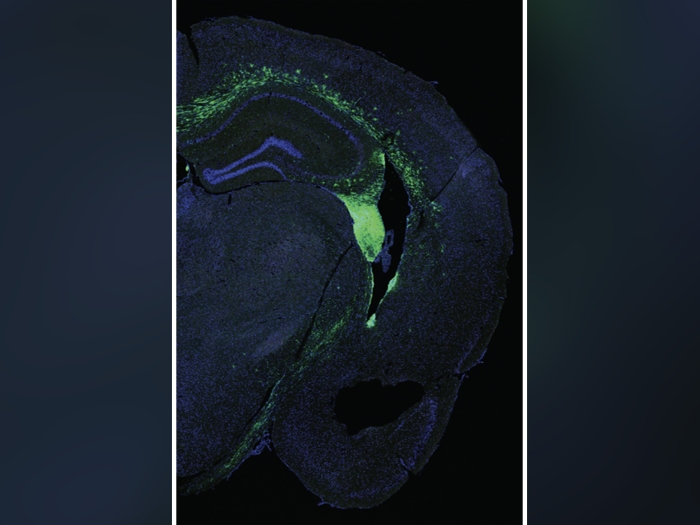
My laboratory's research seeks to understand fundamental questions: How is pleasure generated in the brain? What are the neural bases of reward wanting and reward liking? How are rewards learned & used by brain systems? What causes addiction? What do particular brain limbic systems do? How do neural substrates of fear relate to those of desire? Can an emotion ever be truly unconscious? How are complex streams of real behavior produced by brains? Our current research focuses on brain mechanisms of pleasure and reward. We have found limbic hedonic hotspots that generate pleasure 'liking', and have identified separable brain systems that translate reward into 'wanting', learning and addiction. Most work concentrates on mesocorticolimbic reward circuits involving mesolimbic dopamine projections, nucleus accumbens, ventral pallidum, and amygdala, and on opioid and related neurochemical signals within them that cause liking and/or wanting for rewards. A unique feature of our research is the use of Fos plume techniques for mapping brain pleasure mechanisms, which we developed by combining neurochemical microinjections in brain structures with taste reactivity measures of natural affective reactions to sweetness. In addition, we often collaborate with Dr. J. Wayne Aldridge's lab to study neuronal coding of 'liking' and 'wanting' using electrophysiological techniques. Additional collaborations with Dr. Terry Robinson on incentive salience mechanisms have produced the 'incentive-sensitization' hypothesis of drug addiction. Finally, a separate line of research in our labs has concerned how brain systems actually produce complex patterns of behavior. That research used instinctive patterns of behavior to explore the how brains naturally generate sequential patterns, relevant to understanding symptoms that occur in human diseases like Parkinson's, Huntington's and Tourettes.
|
|||
Smith, K.S., & Berridge, K.C. Opioid limbic circuit for reward: interaction between hedonic hotspots of nucleus accumbens and ventral pallidum. Journal of Neuroscience, 27(7): 1594-605, 2007. Mahler, S.V. Smith, K.S. & Berridge, K.C. Endocannabinoid hedonic hotspot for sensory pleasure: Anandamide in nucleus accumbens shell enhances 'liking' of a sweet reward. Neuropsychopharmacology, Apr 04, 2007. Berridge, K.C. The debate over dopamine's role in reward: the case for incentive salience. Psychopharmacology191, 391-431, 2007. Peci±a, S., Smith, K.S., & Berridge, K.C. Hedonic hotspots in the brain. The Neuroscientist, 12(6), 500-511, 2006. Tindell AJ, Smith KS, Pecina S, Berridge KC, Aldridge JW Ventral pallidum firing codes hedonic reward: when a bad taste turns good. Journal of Neurophysiology 96:1576, 2006. Pecina, S. Schulkin , J., Berridge, K.C. Nucleus accumbens corticotropin-releasing factor increases cue-triggered motivation for sucrose reward: paradoxical positive incentive effects in stress? BMC Biology 4:8, 2006. Pecina, S., & Berridge, K.C. Hedonic hot spot in nucleus accumbens shell: where do mu opioids cause increased hedonic impact of sweetness? Journal of Neuroscience, 25(50):11777-11786, 2005. Smith, K.S., & Berridge, K.C. The ventral pallidum and hedonic reward: neurochemical maps of sucrose "liking" and food intake. Journal of Neuroscience, 25(38), 8637-8649, 2005. Tindell, A.J., Berridge, K.C., Zhang, J.,Pecina, S., & Aldridge, W. Ventral pallidal neurons code incentive motivation: amplification by mesolimbic sensitization and amphetamine. European Journal of Neuroscience, 22, 2617-2634, 2005. Berridge, K.C., Aldridge, J.W., Houchard, K.R., Zhuang, X. Sequential super-stereotypy of an instinctive fixed action pattern in hyper-dopaminergic mutant mice: a model of obsessive compulsive disorder and Tourette's. BMC Biology 3:2, 2005. Find more publications by Dr.Kent Berridge |
|||
| Last updated 8/8/2007 Click here to update | |||