Histone Deacetylase          "Understanding eukaryotic expression"


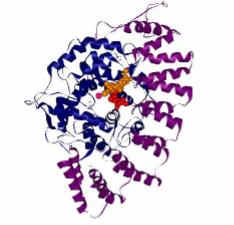
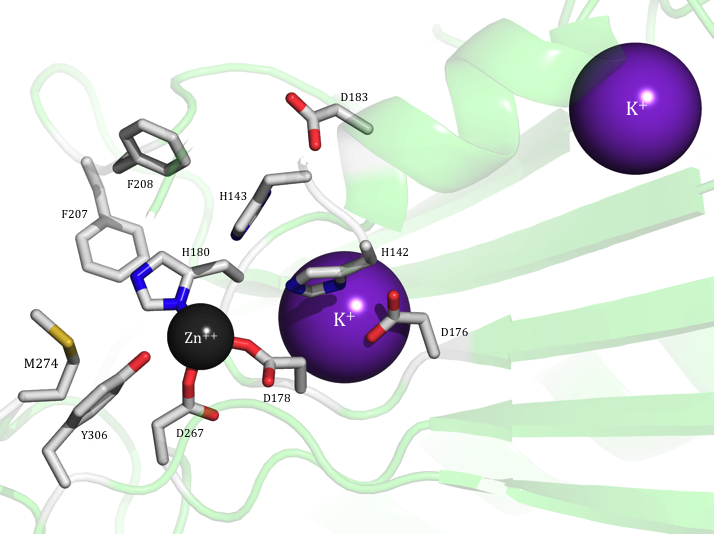
Histone deacetylases catalyze the hydrolysis of N-acetyl lysine residues in histone proteins and plays an important role in the regulation of gene expression. HDACs also deacetylate a growing number of non-histone proteins with biological importance. We are using a variety of biochemical techniques to study the chemical mechanism of the metalloenzyme histone deacetylase 8 (HDAC8), as well as characterizing the role of the active site metal.


HDAC Reaction Scheme

Recent Publications
Dowling et al. Structural Studies of Human Histone Deacetylase 8 and Its Site-Specific Variants Complexed with Substrate and Inhibitors. Biochemistry (2008) vol. 47 pp. 13554-13563

Gantt et al. Catalytic activity and inhibition of human histone deacetylase 8 is dependent on the identity of the active site metal ion. Biochemistry (2006) vol. 45 pp. 6170-8

Project Researchers
Graduate Students
Sam Gattis

Questions about this project? Email Sam: sgattis at umich.edu

  Home>Research Areas>HDAC